

 Roteh Tours
When people think about Cambodia’s ancient heritage, Angkor Wat is often the first place that comes to mind.
But centuries before Angkor became the center of the Khmer Empire, another important city was already flourishing in central Cambodia.
This was Ishanapura, the ancient city now known as Sambor Prei Kuk.
Located in Kampong Thom Province, Sambor Prei Kuk is one of Cambodia’s most important pre-Angkorian archaeological sites. It became a UNESCO World Heritage Site in 2017, recognized for its outstanding architecture, archaeological remains, and importance in the development of Khmer art and architecture.
Today, visiting Sambor Prei Kuk is not simply a visit to ancient temples.
It is an opportunity to walk through a landscape where history, forest, agriculture, and village life continue to meet.
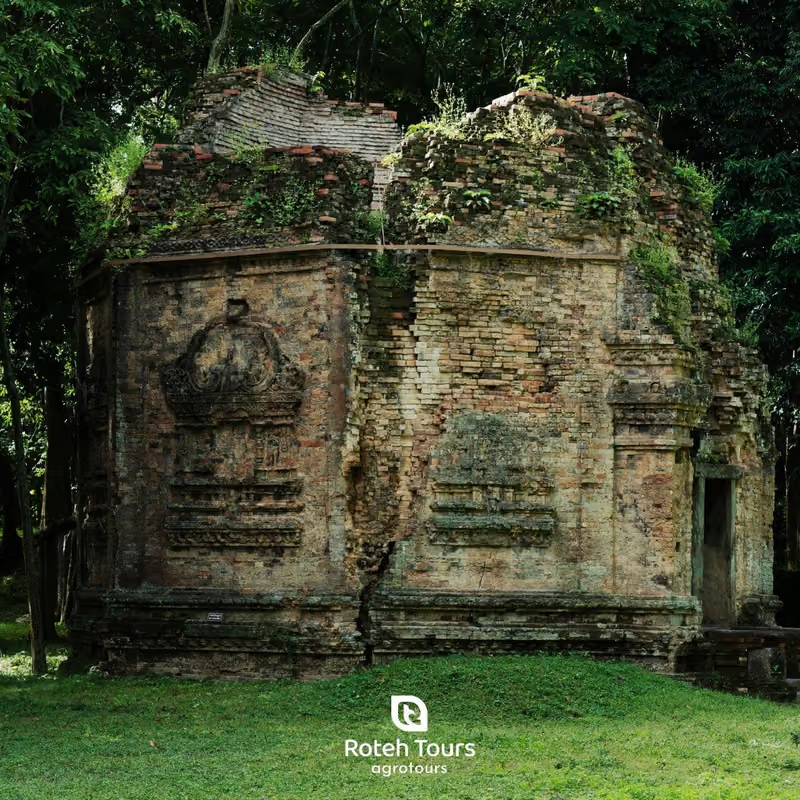
Sambor Prei Kuk contains 186 recorded fired-brick temples within the UNESCO-inscribed property.
For visitors, however, the number is less important than understanding how the temples are organized.
The main temple groups are:
The Northern Group is one of the principal temple areas of Sambor Prei Kuk. Here, visitors can discover brick towers, architectural details, and remains that reflect the religious and artistic traditions of the Chenla period.
The Central Group is particularly known for its impressive lion sculptures and distinctive temple architecture.
The lions are among the most recognizable sculptures at Sambor Prei Kuk and provide an opportunity to see how early Khmer artists developed forms that later became important in Khmer architecture.
The Southern Group contains another important collection of brick temples and architectural remains, including distinctive enclosures and decorative details.
Beyond these three main groups, the wider archaeological landscape contains additional temple remains and structures.
This is why Sambor Prei Kuk should not be thought of as one temple.
It is an ancient city and archaeological landscape.
One of the most interesting reasons to visit Sambor Prei Kuk is to understand what came before Angkor.
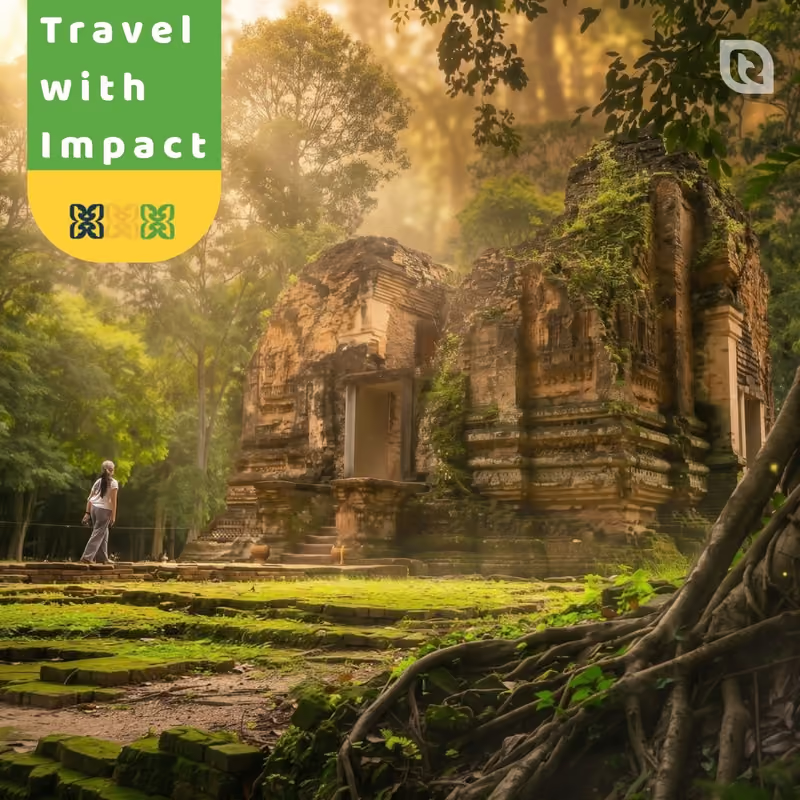
The site was the capital of Ishanapura, associated with the Chenla period during the late 6th and early 7th centuries.
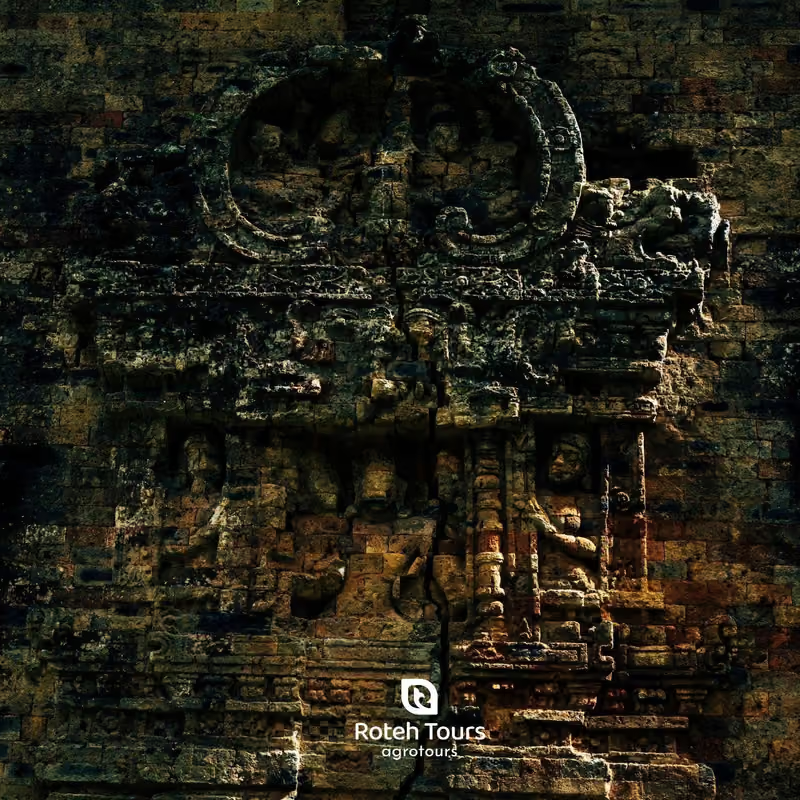
Its architecture and decorative style represent an important stage in the development of Khmer architecture.
For travelers who have already visited Angkor, Sambor Prei Kuk offers another perspective.
Instead of only seeing the height of the Khmer architectural tradition, you can begin to understand some of the earlier ideas and styles that came before it.
It is like discovering an earlier chapter of Cambodia's architectural story.
The temples are the reason many travelers first come to Sambor Prei Kuk.
But they should not be the only thing you look at.
Walk a little further.
Look at the forest surrounding the temples.
Notice the quiet roads connecting villages.
Observe the agricultural landscapes.
Meet the people who live around the heritage site.
This is where Sambor Prei Kuk becomes more than an archaeological destination.
The forest is part of the experience. The surrounding communities are part of the landscape. Agriculture remains connected to everyday life.
The heritage does not stop at the temple walls.
For the communities around Sambor Prei Kuk, the heritage site is more than a historical attraction.
It is part of the identity of the area and an important source of tourism opportunities.
Local people can participate in tourism through guiding, accommodation, food, handicrafts, transportation, and other services.
For travelers, this creates an opportunity to experience the destination through local people rather than simply observing it from outside.
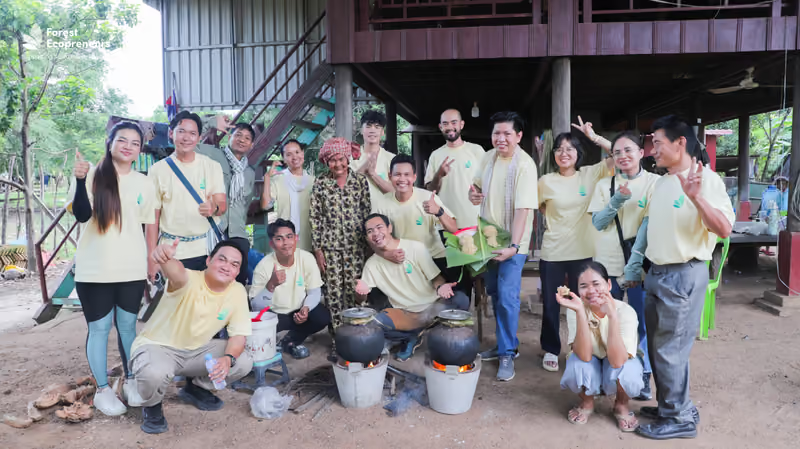
You can stay with a local family.
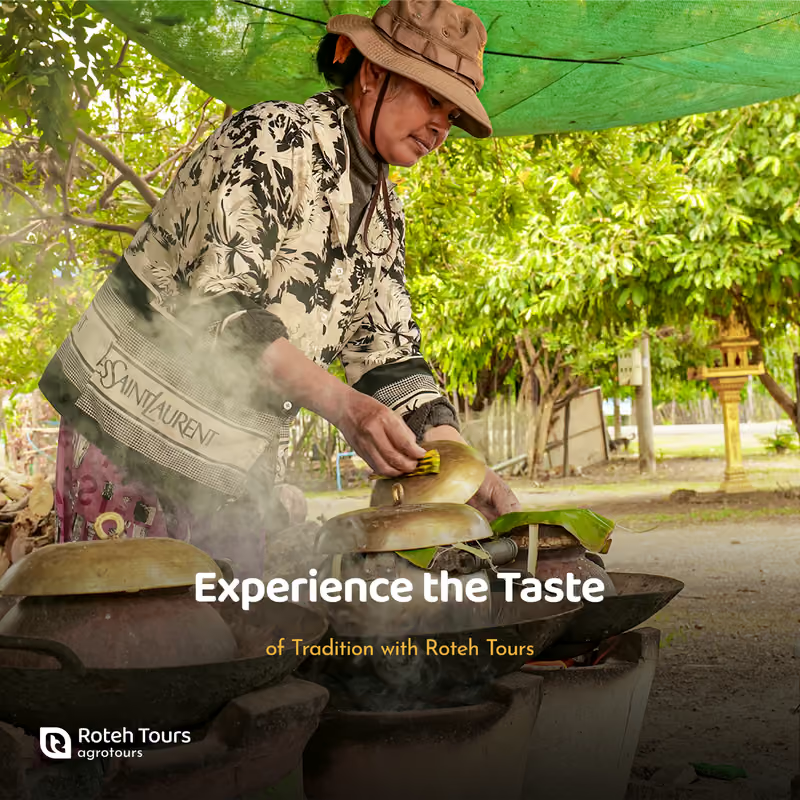
You can share a meal.
You can talk with farmers.
You can discover local ingredients.
You can learn how people live with the land surrounding this ancient heritage.
This relationship between heritage and community is an important part of understanding Sambor Prei Kuk today.
Sambor Prei Kuk is also surrounded by a rural landscape where agriculture remains part of everyday life.
Depending on the season, travelers may encounter different crops, farming activities, local harvests, and food traditions.
This creates an interesting connection between ancient heritage and contemporary life.
The people who live here are not living inside a museum.
They are farming, cooking, raising families, working, and building their livelihoods around a landscape that has been important for more than a thousand years.
This is why we believe agritourism can become part of the Sambor Prei Kuk experience.
Learning about agriculture can help travelers understand not only what people eat, but also how communities interact with their land.
How Long Should You Spend at Sambor Prei Kuk?
There is no single answer.
It depends on how deeply you want to explore.
For travelers with limited time, a half-day visit can introduce you to the main temple groups and key architectural features.
A local guide or storyteller can help you understand what you are seeing rather than simply walking between ruins.
If you have a full day, you can go beyond the main temples.
Combine heritage exploration with:
Local food
Village visits
Agriculture
Community activities
Local storytelling
This gives you a better understanding of both the ancient site and the people living around it.
For travelers who want to slow down, we recommend staying overnight.
A two-day experience allows you to combine:
Ancient heritage + village life + agriculture + local food + homestay.
Instead of arriving, taking photographs, and leaving, you have time to experience the rhythm of the community.
For researchers, historians, architecture students, photographers, archaeologists, and serious heritage travelers, Sambor Prei Kuk offers much more to explore.
A longer visit can allow more time for:
Architectural observation
Temple comparison
Decorative details
Inscriptions
Archaeological landscapes
Ancient water systems
Conservation
Photography
Local heritage knowledge
The site continues to be an important place for archaeological research and conservation.
Sambor Prei Kuk is not simply another ancient temple destination.
It offers a different atmosphere.
There are no crowds comparable to Cambodia’s most famous temple complexes.
There is space to walk slowly.
You can hear the forest.
You can see trees growing around ancient brick structures.
You can meet people from nearby communities.
And you can take time to understand the relationship between the ancient city and the landscape around it.
For some travelers, that slower experience is exactly what makes Sambor Prei Kuk special.
Experience Sambor Prei Kuk With Roteh Tours
At Roteh Tours, we believe that visiting Sambor Prei Kuk should be more than sightseeing.
We want travelers to understand the destination through the people and places that make it unique.
Our experiences can connect:
Heritage — Explore the ancient temples with local storytelling.
Community — Meet people living around the heritage landscape.
Agriculture — Discover seasonal crops, farming, and local harvests.
Food — Taste local ingredients and experience community meals.
Homestay — Stay with local hosts and experience rural Cambodian life.
Nature — Walk through the forest and countryside surrounding the temples.
The goal is simple:
Don't just visit Sambor Prei Kuk. Take time to understand it.
Sambor Prei Kuk gives us a chance to look at Cambodia from a different perspective.
It tells us about a civilization that existed before Angkor.
It shows us how architecture developed over time.
And today, it continues to exist alongside communities, farms, forests, food, and everyday life.
That is what makes the journey meaningful.
You are not only looking at the past.
You are experiencing a living landscape where the past and present continue to meet.
If you are looking for a deeper way to explore Cambodia, Sambor Prei Kuk is a place worth slowing down for.
Travel With Impact. 🌱
 Roteh Tours
 Roteh Tours